 Kinetic Span
Our Rainwater Harvesting Services
Every site we visit has a different roof, a different drainage layout and a different relationship with water. Some plants need a complete system designed from scratch. Others already have a plan and need a crew who can build it properly. Some just want someone to tell them honestly what’s possible.
That’s why our work is split into seven services, and why you can take one on its own or combine several. This page is a quick map of them. Each service has its own page with the full detail, so here we’ve kept it short: what it is, who it suits and where to read more.
Service Offerings
Seven ways to make better use of the water your site already receives.
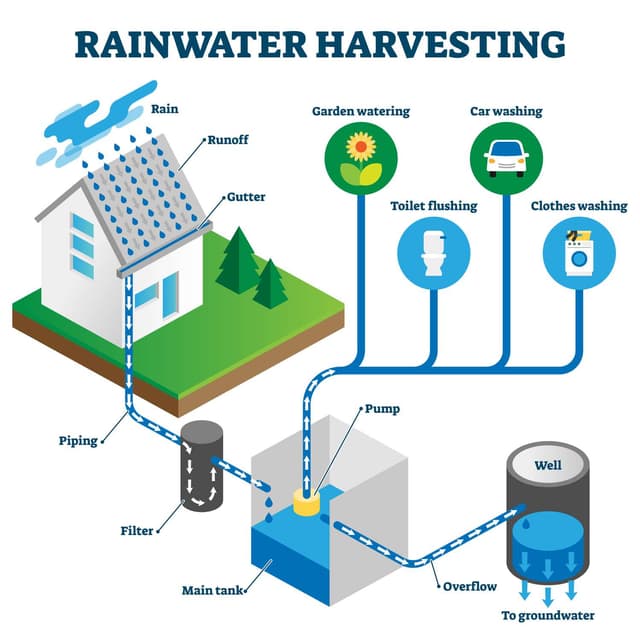
Custom-designed systems built around your site, not a catalogue. We study your roof area, drainage, soil conditions and daily water use, then design the whole chain: catchment, filtration, storage and, where it makes sense, recharge. Every system is sized to what you’ll actually use, so you’re not paying for capacity that sits empty.
Learn more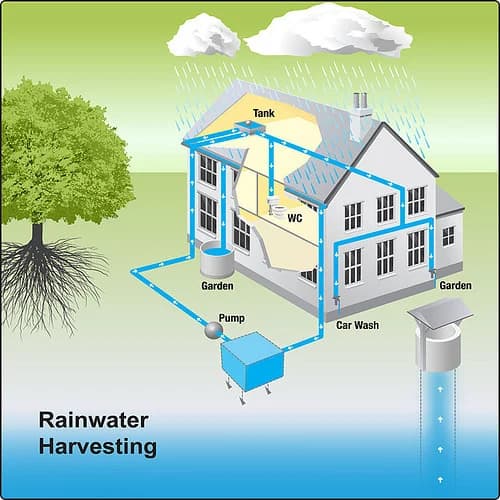
Prefabricated, scalable tanks and components that arrive ready to assemble. They suit plants that can’t afford long shutdowns, projects with tight timelines and businesses that expect to grow. Start with what you need today, then add modules later without digging everything up again.
Learn more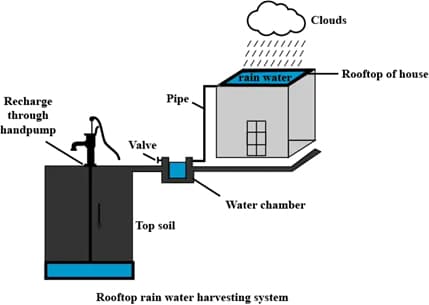
Recharge pits, soak pits and percolation systems that send excess rain down to the aquifer instead of out through the drain. They’re simple, long-lived and quietly effective, and they’re often the first thing a groundwater authority or auditor asks to see. Good design keeps them clear of silt for years.
Learn more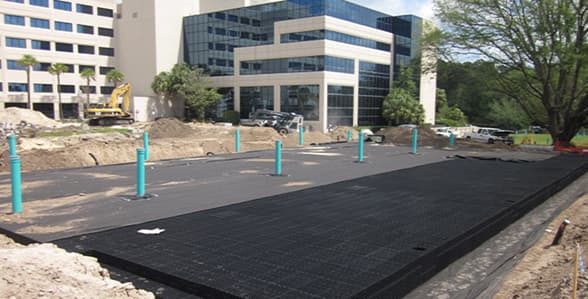
Our own crew handles the work from marking out to commissioning: pipework, first-flush diverters, filters, tank placement and testing. You deal with one accountable team, get a clear schedule, and receive a handover that includes training for the people who’ll look after the system.
Learn more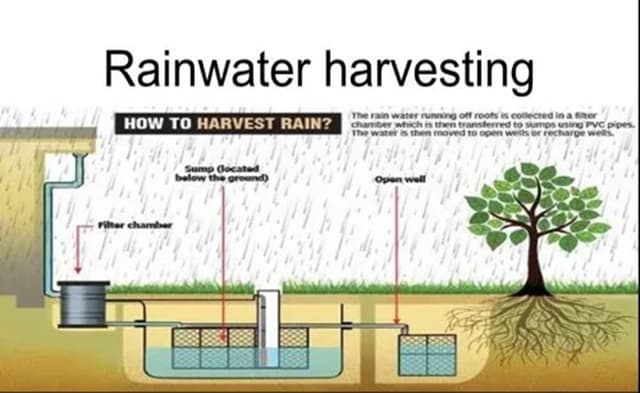
High-capacity storage in FRP, concrete or plastic, sized to your roof and your demand. We talk through the trade-offs honestly: cost, lifespan, footprint, above ground or below. The aim is a tank that fits your site, rather than a site rearranged around a tank.
Learn more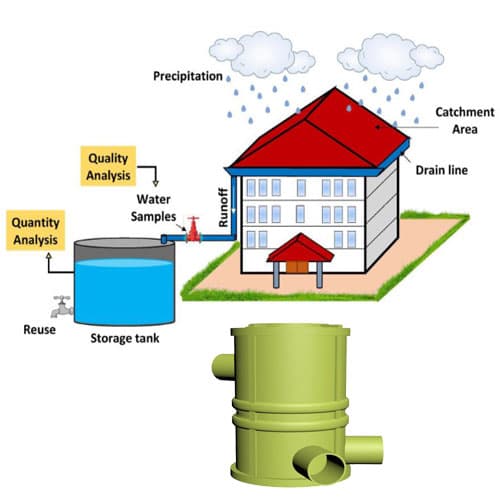
Not ready to build yet? Start with advice. We review how your site uses water, explain which regulations apply, and prepare a feasibility report or design brief you can take to your board, your auditor or even another contractor. We’d rather you decide with good information than rush.
Learn more
Why Harvest Rainwater
Because the numbers are hard to argue with. Picture a 2,000 square metre warehouse roof in a place that gets 800 mm of rain a year. One millimetre of rain on one square metre is one litre, and a well-kept catchment holds on to roughly 80% of it. That works out to around 12.8 lakh litres a year, falling on a roof you already own. It’s a rough sum, not a promise, but it shows why the conversation is worth having.
It lowers your water costs.
Every litre you collect is one you don’t buy from a tanker, the municipal line or a borewell.
It eases the strain on groundwater.
Recharge systems send surplus rain back into the aquifer that your site, and everyone around you, depends on.
It makes compliance simpler.
A working system with proper records is a far easier answer for a regulator or auditor than a plan on paper.
It gives you something real to report.
Litres collected and litres recharged are figures you can put in an ESG or CSR report and stand behind.
And on a practical level, it means more water on hand when supply tightens.
How It Works
Whichever service you start with, the path looks much the same.
Site survey.
We visit, walk the roof, trace the drains and look at how your plant actually uses water. You get an honest estimate of what you can collect and what it’s worth to you.
Design.
You receive a plan covering layout, capacity, materials, cost and expected savings. We explain it in plain language and revise it until it fits your budget and the way your operation runs.
Installation.
Our crews and certified contractors build to spec, test every connection and plan the work around your production schedule, not against it.
Handover and support.
Your team gets training and a simple maintenance checklist. After the system is running, we stay reachable for check-ups, cleaning and upgrades.
Frequently Asked Questions
01I’m not sure which service I need. Where do I start?
Start with a conversation. Book a free consultation and we’ll look at your site, your water use and your goals, then point you to the service, or the mix of services, that makes sense. Some plants need the whole system, others only one piece. You don’t have to know the answer before you call.
02Do I have to take everything from you, or can I pick one service?
Pick what you need. Each service stands on its own, so you can hire us to install a design you already have, to supply tanks, or to run the whole project. If you start small and want more later, that’s fine too.
03Will installation disrupt production?
We plan the work around your operations, not the other way round. Modular systems in particular are designed to go together quickly on site, which helps when downtime isn’t an option. We’ll talk through the schedule with you before anything starts.
04Should my tank go underground or above ground?
It depends on available space, soil conditions, budget and how the water will be used. Underground tanks free up floor area, while above-ground tanks are usually easier to inspect. Our tank page walks through the trade-offs, and we’ll help you decide during the survey.
05Can the system grow with my plant?
Often, yes. Modular systems are built to be scalable, so you can add capacity as demand grows. With other designs, we’ll ask about your plans during the survey so we don’t design you into a corner.
Case Studies
Numbers on a page only tell you so much, so we’d rather show you real projects: the site, the problem, what we built and how it’s performing. Our case studies follow a project from first survey to first harvest, so you can judge the work for yourself.
Real projects. Practical solutions. Measurable results.